
The perennial fund: savings that winter over
Emergency money is not a wall against difficulty. It is a living reserve: slow-grown, occasionally cut back, and built to return.
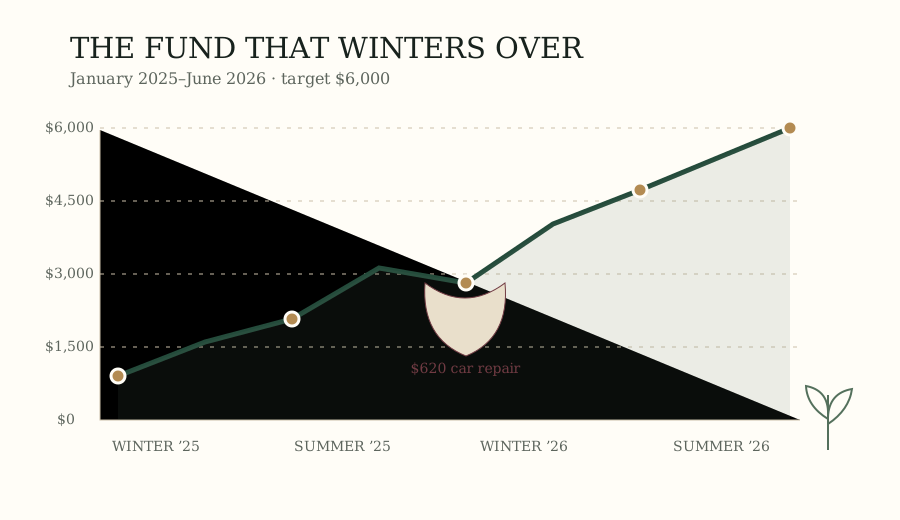
Build emergency savings in thresholds, not one intimidating leap. In this 18-month case, a household began with $900 on January 3, 2025, automated $260 per month, absorbed a $620 car repair, and reached $6,000 on June 18, 2026. The fund worked before it was “finished.”
Perennials are not plants that avoid winter. They are plants organized to return after it. An emergency fund deserves the same definition. Its success is not an untouched balance rising forever, but the capacity to be used without destroying next month.
The household in this case has two adults, one child, one 2014 car, and take-home income that averaged $4,760 a month in 2025. One salary was stable; freelance income varied from $180 to $1,140 monthly. Essential expenses averaged $3,050. Names are withheld, but statements and transfers were reviewed through June 30, 2026.
The first bed: one likely disruption
On January 3, 2025, the fund held $900. Rather than begin with the abstract instruction to save six months of expenses—$18,300 for this household—the first target was $1,500. That figure covered the health-plan deductible or a plausible car repair, the two most likely disruptions.
A $130 transfer followed each twice-monthly paycheck. Freelance income was excluded from the base plan because it was not dependable. When it arrived, 20% went to the fund until the next threshold was reached. The arrangement valued repetition over heroics: $260 in an ordinary month, more in a strong one, never a target that required perfect restraint.
Summer growth, then weather
By August 2025, the balance was $3,120—slightly more than one month of essential costs. Interest contributed only $38 during the first eight months; the habit did the real work. The account was an FDIC-insured high-yield savings account, separate from checking but available within one business day.
On January 16, 2026, the car required a radiator and hose replacement. The bill was $620. The household paid from savings, avoided a credit-card balance at 22.49% APR, and did not classify the withdrawal as defeat. The fund fell from $3,940 to $3,320. Automatic transfers continued on January 23.
| Reached | Balance | Meaning | Next rule |
|---|---|---|---|
| March 14, 2025 | $1,500 | One likely repair or deductible | Keep $260 monthly automatic |
| August 29, 2025 | $3,120 | One month of essentials | Add 20% of freelance income |
| January 16, 2026 | $3,320 after use | Repair paid without debt | Resume; no catch-up penalty |
| June 18, 2026 | $6,000 | Nearly two months of essentials | Reduce base transfer to $100 |
Why $6,000 was enough for now
Three to six months of essential expenses remains a useful destination for households with unstable income, dependents, health risks, or one earner. It is not the only responsible stopping place. At $6,000, this household held almost two months of essentials, both adults had access to credit, and one stable salary covered 78% of routine costs.
On June 18, they reduced the automatic transfer from $260 to $100 and sent the other $160 toward a retirement account. The emergency fund still grows, but more slowly. The plan will be reconsidered on January 5, 2027, or sooner if employment, insurance, housing, or the car changes.
This is where thresholds help. A single six-month target makes $5,900 feel almost as incomplete as $900. Stages acknowledge that protection improves continuously. Our definition of liquidity is useful here: the money must be reachable without selling at a bad time or waiting through a penalty.
What belongs in the fund
An emergency is necessary, urgent, and not reliably timed. A failed water heater qualifies. A December gift does not; it belongs in a sinking fund because December is on the calendar. A veterinary bill may qualify, though a pet-care sinking fund can cover predictable annual care. The categories can cooperate.
Keep the reserve boring. An insured savings account or money-market deposit account is appropriate; stocks, cryptoassets, and long-term certificates add risk or delay. A competitive rate matters, but the difference between 4.00% and 4.25% on $6,000 is $15 a year before tax. Access, insurance, and the absence of fees matter more.
The refill is part of the design
People sometimes treat a withdrawal as evidence they lack discipline. That makes a useful account emotionally untouchable. The January repair demonstrates the opposite: $620 left, the car returned, interest charges never began, and the system resumed. A perennial fund includes its own regrowth instructions.
After a withdrawal, return to the previous automatic contribution. If the balance falls below the first threshold, temporarily pause optional extra debt payments or lower-priority goals, while preserving required payments and any employer retirement match. Do not demand an austerity month unless the underlying emergency continues.
The case in one season
Choose one likely disruption, automate an amount that survives ordinary months, hold the money somewhere liquid and insured, and write the refill rule before the first withdrawal. The balance is important. The arrangement that can restore it is the deeper asset.
Frequently asked questions
How much should an emergency fund hold in 2026?
Start with one likely disruption, then one month of essential expenses, and work toward three to six months according to income stability, dependents, health, insurance deductibles, and household risk. A useful first threshold can protect you long before the final target.
Where should emergency savings be kept?
Use an insured, liquid savings or money-market deposit account without market risk, maintenance fees, or withdrawal friction. Keep it separate enough to avoid casual spending but reachable within one or two business days.
Should you refill a fund after using it?
Yes, but not as punishment. Resume the prior automatic contribution and temporarily redirect optional goals if the balance fell below your first threshold. The withdrawal was the fund doing its work.
To find room for the first transfer, use the seasonal method in The meadow ledger or compare tools in our 2026 budgeting-app ranking.